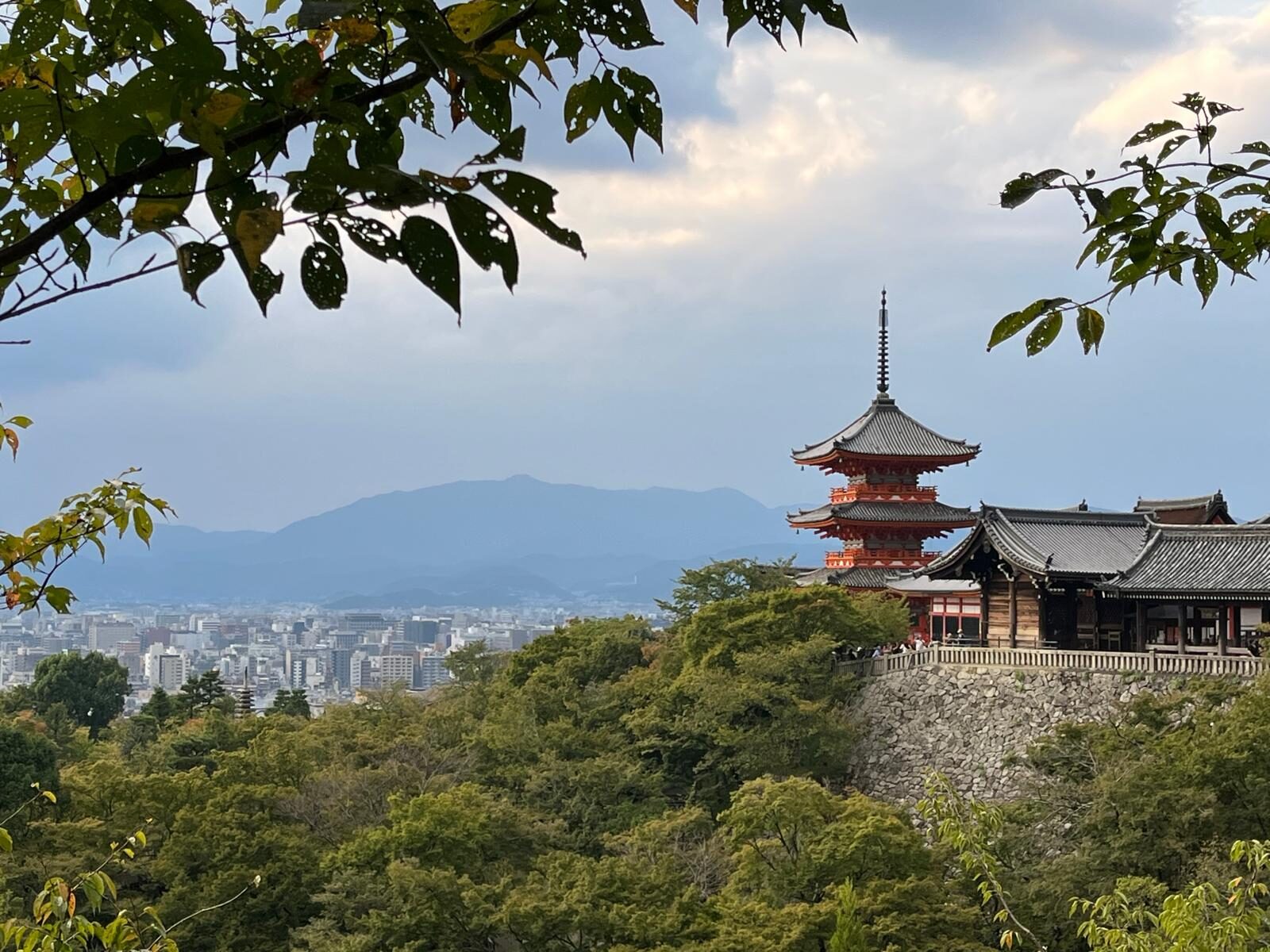
 Photo: Cami and Matteo
Japan in autumn: Tokyo, Kyoto at first light, a night in a mountain temple and one under a thatched roof
Fourteen days from Tokyo and back: a ryokan with its own hot-spring bath in Hakone, Kyoto's shrines on foot before the crowds, a night with the monks of Koyasan, Kanazawa's garden at dawn and a night in a farmhouse in Shirakawa-go. Built on the trip our friends Cami and Matteo made, with the rushed stops taken out.
Day 1 · Tokyo
Into Asakusa, and Senso-ji after dark
Getting there
Direct flights reach Tokyo from Zurich and most large European hubs in about 13 to 14 hours. From Haneda or Narita, the train runs straight into Asakusa.
- On an iPhone, add a Suica card to the wallet before you land: it pays for the metro, local buses, some lockers and the convenience stores
- An eSIM with data saves hunting for Wi-Fi all trip
Cash and cards
Most places take cards now, but small restaurants, temples and the bus to Shirakawa-go are easier with cash. The ATMs in 7-Eleven stores take foreign cards, which was our friends' first tip for anyone going.
Where you're staying
The Gate Hotel Kaminarimon by Hulic, Asakusa: a design hotel right across the street from the great gate of Senso-ji, with its lobby and restaurant on the 13th floor, looking straight at the Tokyo Skytree.
- Asakusa is the old east side of Tokyo, and the quietest place in the city to wake up early
- A few minutes on foot from Asakusa station


Photos: gate-hotel.jp
The evening
Senso-ji after dark: Tokyo's oldest temple, at the end of the Nakamise shopping street. The halls close in the late afternoon, but the grounds stay open and the pagoda and the great lanterns are lit in the evening.
- The Kaminarimon, the gate with the giant red lantern, is right outside the hotel
- Come back at 07:00 one morning to see it almost empty


Photos: Wikimedia Commons (Maarten Heerlien; Guilhem Vellut; CC BY 2.0)
Day 2 · Tokyo
Meiji Jingu, Harajuku and the Shibuya crossing from above
The morning
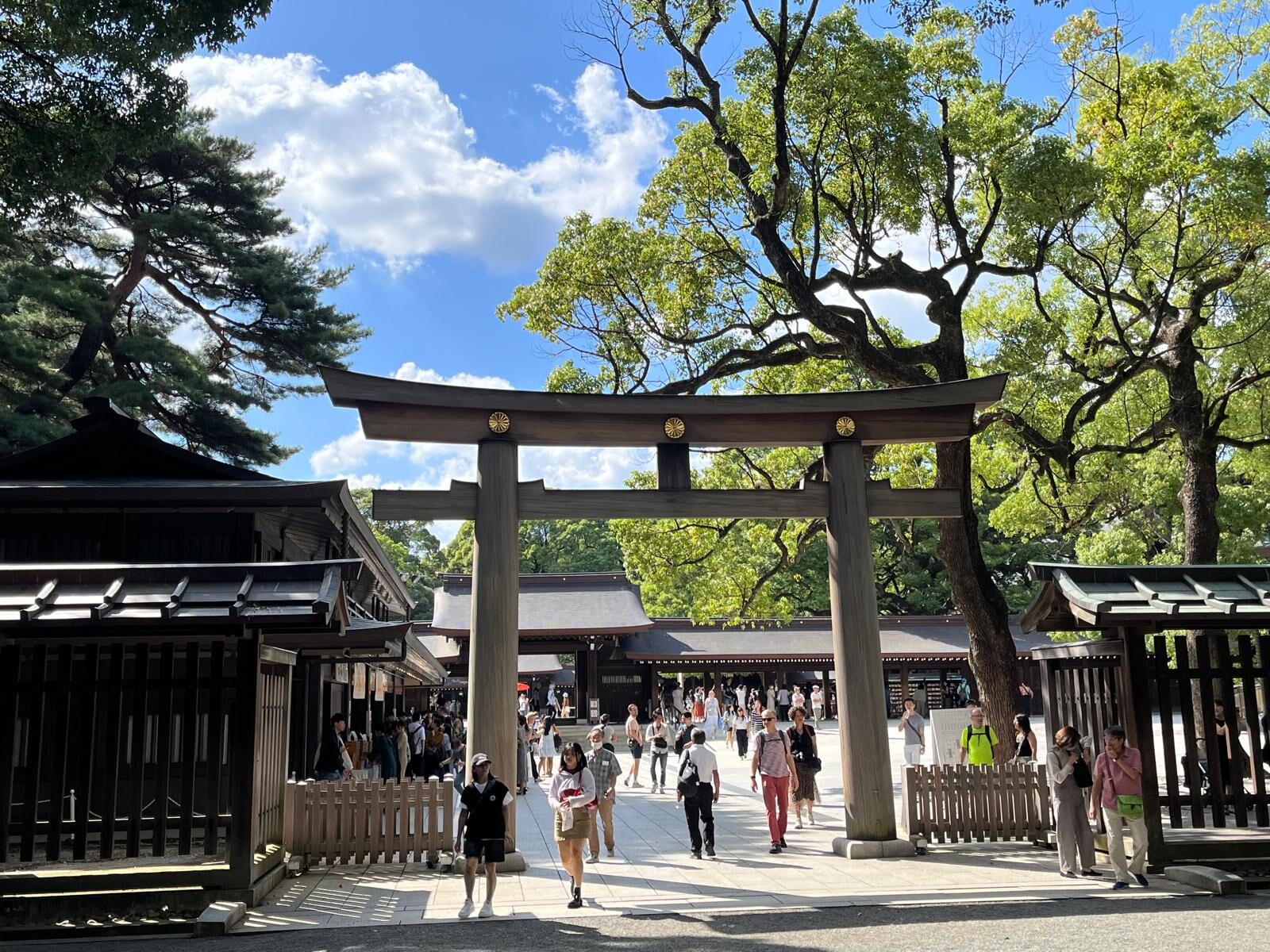
Meiji Jingu: the shrine of the Emperor Meiji, deep in a forest planted for it when it was built in 1920, entered through great wooden torii a few steps from Harajuku station.
- It opens at sunrise and is free: go early, while the gravel paths are quiet
- Yoyogi Park is next door for a walk afterwards
Photos: Cami and Matteo
The afternoon
Harajuku and Omotesando on foot: the crowds of Takeshita Street, then the tree-lined avenue of Omotesando and its architecture, down towards Shibuya.
At dusk
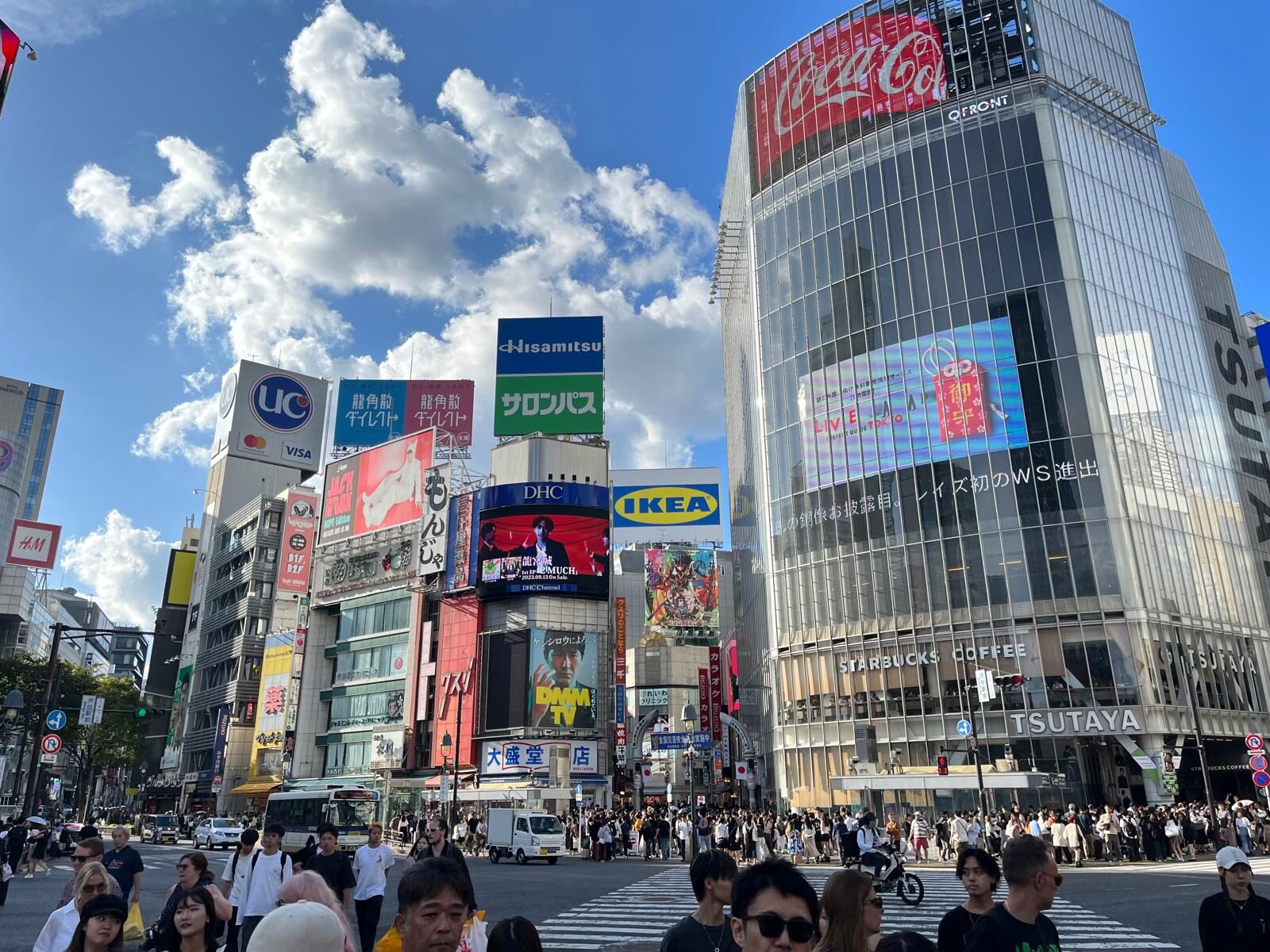
The Shibuya crossing from the roof of MAGNET by Shibuya109: the rooftop lounge looks straight down on the busiest pedestrian crossing in the world, and your ticket includes a drink.
- ¥1,800 with a drink, open until 22:00
- Our friends' tip: this is the view, without the long queue for the big observation decks
- Go as the light fades and the screens come on
Photos: Cami and Matteo
Dinner
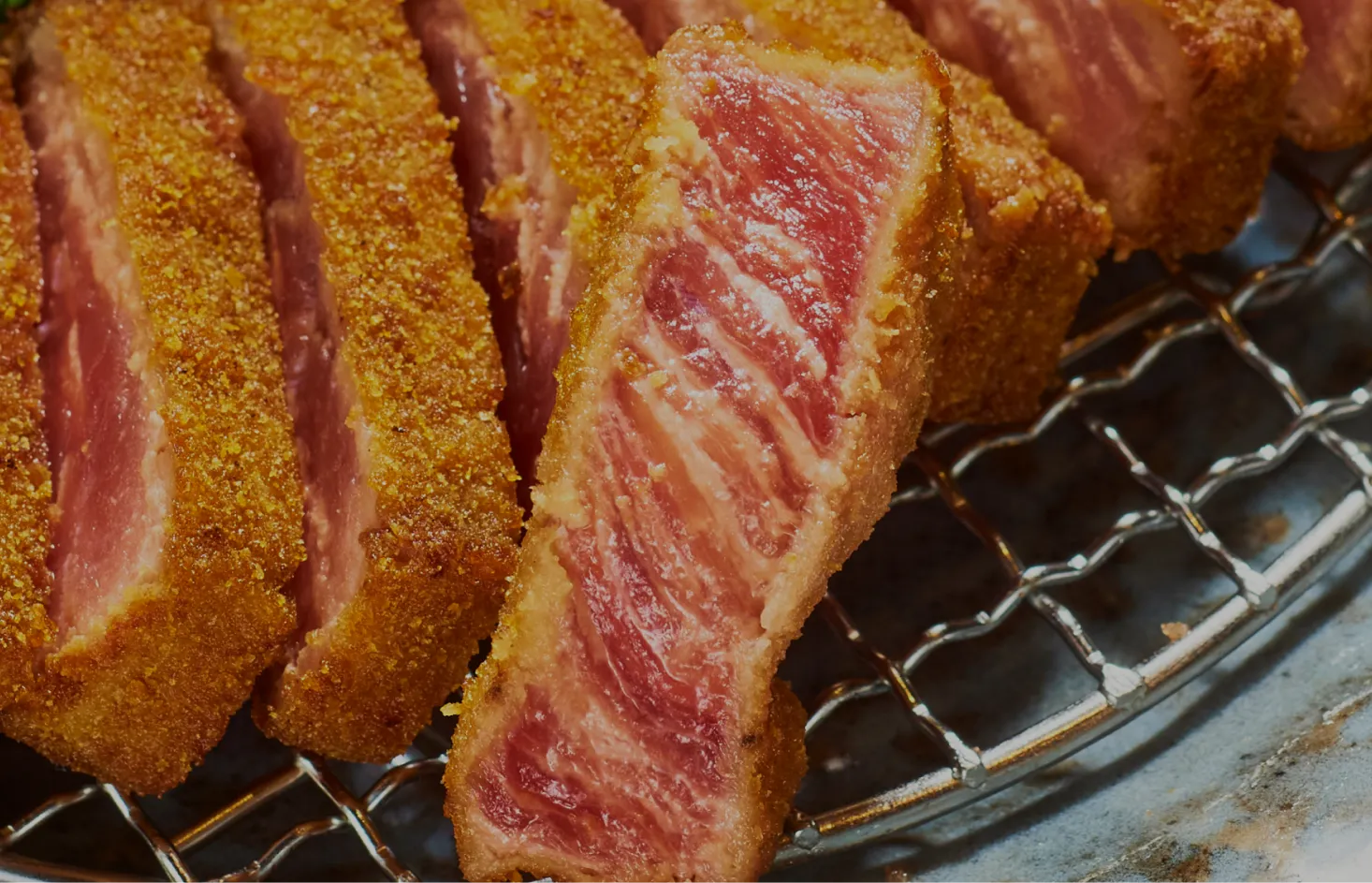
Gyukatsu Motomura, Shibuya: beef cutlet fried rare in a thin, crisp crust, which you finish yourself, slice by slice, on a small hot stone at your place.
- No bookings and usually a queue: go early or late
- Our friends' warning: you will leave smelling of it


Photos: gyukatsu-motomura.com
Day 3 · Tokyo
Old Yanaka, rooms of light, and the best sushi of the trip
The morning
Yanaka on foot: wooden houses, small temples, the old cemetery and the Yanaka Ginza shopping street, one of the few corners of Tokyo that still looks the way the city used to.
Lunch
Kamunabi, Sendagi: a tiny ramen counter ten minutes from Yanaka, and our friends' bowl of the trip.
- Open for lunch Wednesday to Sunday, and also on weekend evenings, until the soup runs out
The afternoon
teamLab Planets, Toyosu: a digital art museum you walk through barefoot, wading through water and rooms of mirrors and light.
- Timed tickets only: book ahead
- Afterwards, the Rainbow Bridge and the bay from Odaiba as the lights come on
Dinner
Sushi Kano, Edogawa: a neighbourhood omakase counter half an hour east of the centre, where the chef serves piece by piece.
- Our friends called it the best dinner of their lives
- About ¥25,000 each for the omakase; closed on Wednesdays; book well ahead
Day 4 · Hakone
Over the volcano by ropeway, and a hot spring of your own
Getting there
The Romancecar from Shinjuku to Hakone-Yumoto, about an hour and a half. The Hakone Freepass covers the train from Shinjuku and every train, cable car, ropeway, boat and bus in Hakone for two days.
- Freepass from Shinjuku: ¥7,100, plus a small supplement for the reserved Romancecar seat
- Send the big bags ahead from Hakone-Yumoto station to the ryokan and travel light
The rail pass
The national Japan Rail Pass costs ¥53,000 for seven days from October 2026. On this route the JR trains add up to well under that, and the private lines to Hakone and Koyasan are not covered, so single tickets and the Hakone Freepass come out cheaper.
The day
The Hakone loop: the mountain railway up to Gora, the cable car, then the ropeway over Owakudani, a volcanic valley still steaming with sulphur, and a boat across Lake Ashi with Mount Fuji behind it on a clear day.
- Do the loop on the clearest morning: Fuji hides behind cloud most afternoons
- Eat a black egg at Owakudani, boiled in the hot spring
- From Moto-Hakone, walk a stretch of the old Tokaido road under 400-year-old cedars
Where you're staying
Hakone Kowakien Ten-yu: every room has its own open-air hot-spring bath looking over the forest, and there is an infinity onsen on the upper floors.
- Our friends' tip from their own night in Hakone: the private bath in the room is what makes it worth it, so book a room that has one
Day 5 · Kyoto
The bullet train west, and Gion by lantern light
Getting there
Down to Odawara, then the Hikari shinkansen to Kyoto, about two hours. Only some trains stop at Odawara, so reserve seats for a fixed train.
Where you're staying
Terrace Kiyomizu Kyoto, Higashiyama: a small modern hotel at the foot of the Kiyomizu hill, walking distance from Gion and the old lanes.
- Our friends' Kyoto hotel: a great location, a fair price and rooms that are big for Japan
When the maples turn
Hakone's leaves usually turn in early to mid November, Kyoto's and Kanazawa's in the second half of the month. 23 November is a national holiday, and the weekend around it is the busiest of the season in Kyoto.
The evening
Gion at dusk: Hanamikoji, the willows along the Shirakawa canal, then the lantern-lit alley of Pontocho above the river.
A last drink
Bar Alchemist, Pontocho: a small cocktail bar, recommended to our friends by a waiter in Gion.
Flagship day
Fushimi Inari at first light, then Higashiyama into the night
First light
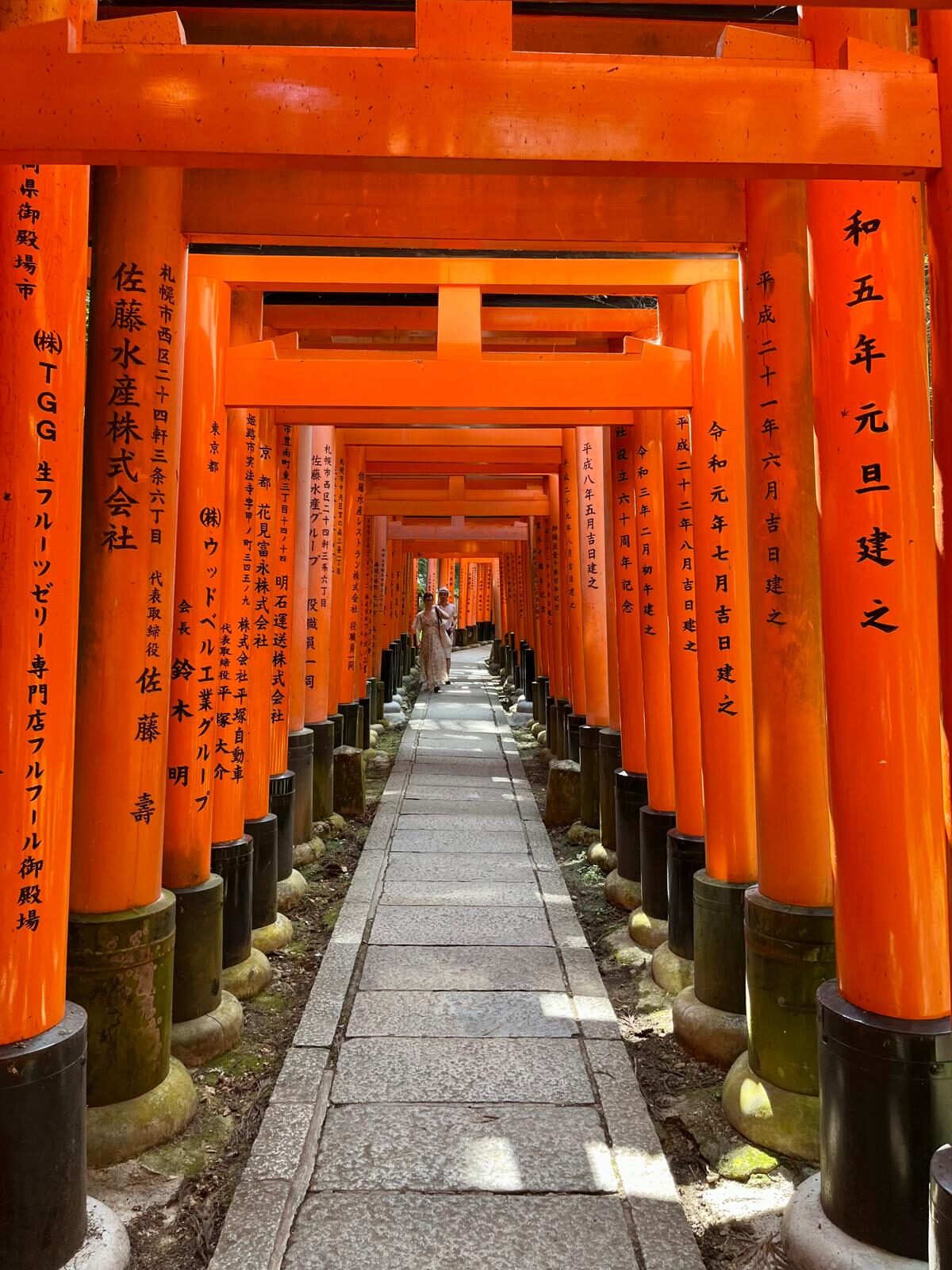
Fushimi Inari Taisha: the mountain shrine where thousands of vermilion torii gates climb the slopes of Mount Inari, and the walk to the summit and back takes two to three hours.
- Be at the bottom gate by 07:00: the crowds stay in the first stretch, and above the Yotsutsuji crossroads you have the path almost to yourselves
- Open day and night, with no ticket
- Each gate is a gift from a family or a company: their name is painted on the back
Photos: Cami and Matteo
The afternoon
Kiyomizu-dera: the wooden stage of the main hall juts out from the hillside over a slope of maples, with all of Kyoto spread out below.
- In the leaf season the temple also opens for an evening light-up: worth timing the visit for it
- Then walk down the stepped lanes of Sannenzaka and Ninenzaka
Photos: Cami and Matteo
Go early, everywhere
Kyoto's famous places are full by mid-morning in November. Kiyomizu-dera opens at 06:00 and Fushimi Inari never closes, so the hour after sunrise is when you get them with the locals.
After dark
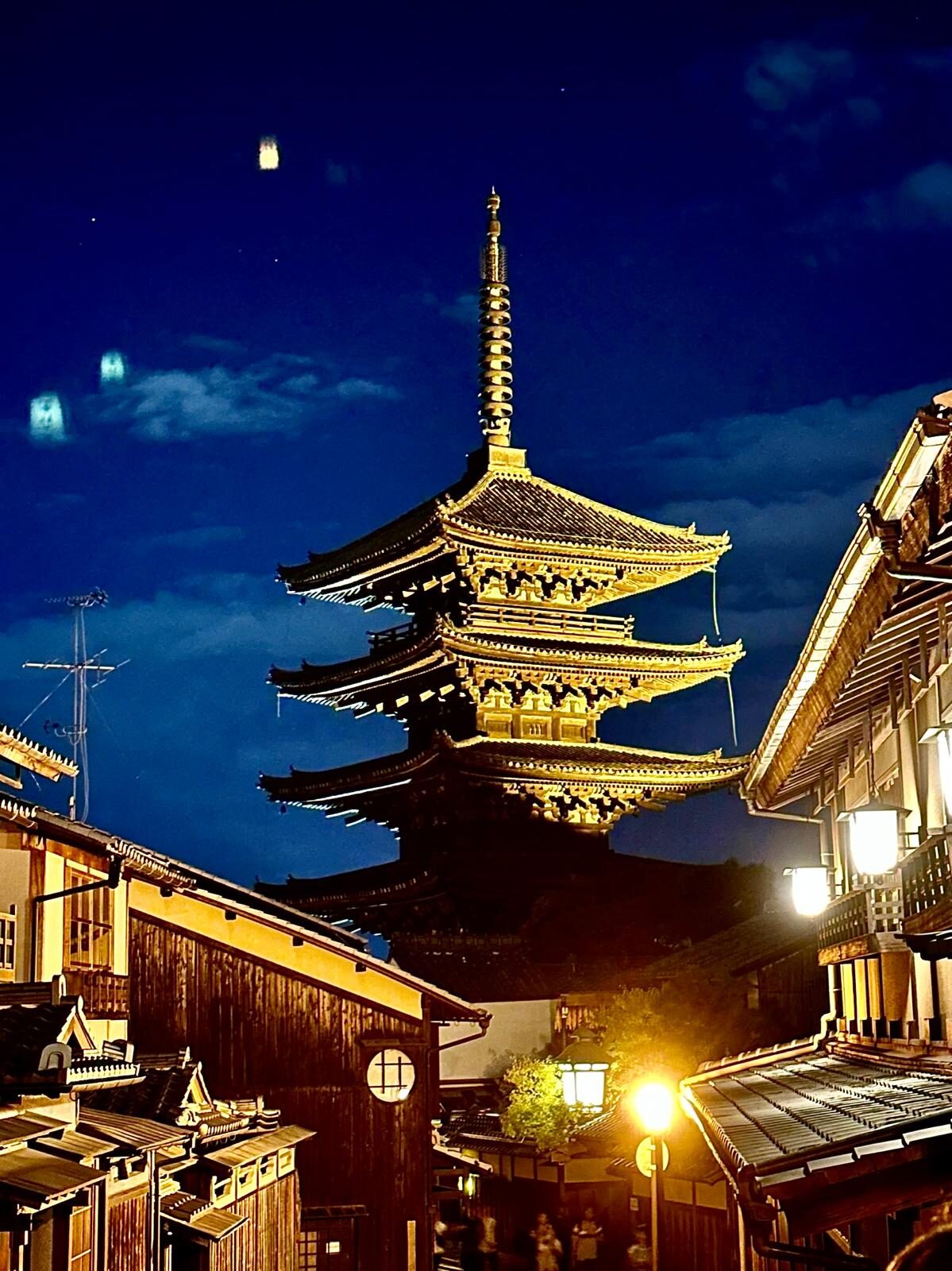
The Yasaka pagoda, at the bottom of the lanes: the five-storey pagoda of Hokan-ji, lit up above the old wooden houses.
Photos: Cami and Matteo
Dinner
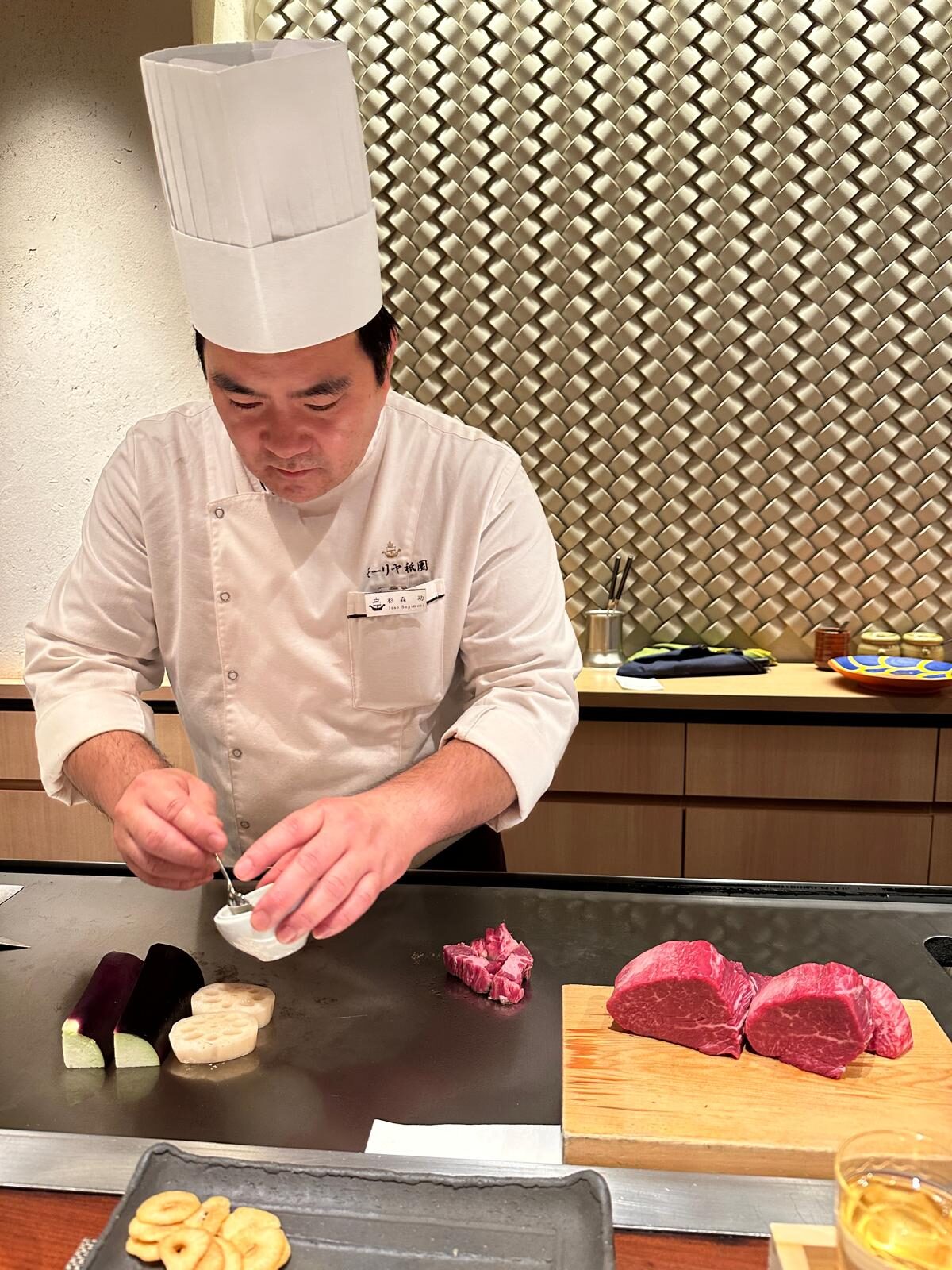
Mouriya Gion: Kobe beef cooked on the teppan in front of you by your own chef, a few minutes' walk from Gion-Shijo.
- Our friends' five-star dinner, and the splurge of their trip: courses run from about ¥20,000 each
- Book a few days ahead
Photos: Cami and Matteo
Day 7 · Nara
The Great Buddha, the deer park and sushi in persimmon leaves
The day
Nara, under an hour from Kyoto by train: Todai-ji and its giant bronze Buddha, the five-storey pagoda of Kofuku-ji, and the park in between, where the deer bow for crackers.
- Start at Todai-ji at opening time, before the school groups
Lunch
Hiraso: kakinoha-zushi, the Nara speciality of sushi wrapped in persimmon leaves, our friends' lunch in Nara.
Day 8 · Kyoto
The bamboo grove at dawn, the Golden Pavilion and the rock garden
The morning
Arashiyama: the bamboo grove before 08:00, then the garden of Tenryu-ji and the riverside below the wooded hills.
- Our friends' tip: many of the old tea houses close early, so stop for tea and sweets by about 14:00
The afternoon
Kinkaku-ji and Ryoan-ji, twenty minutes apart: the Golden Pavilion over its pond, then the fifteen stones of the most famous rock garden in Japan.
- Both close at 17:00
Day 9 · Koyasan
Up to the monks' mountain, and the cemetery by lantern light
Getting there
Through Osaka to Namba, the Nankai line up the valley to Gokurakubashi, then a cable car and a short bus ride to the town at the top: two and a half to three hours from Kyoto.
Where you're staying
Kumagaiji: a working temple that takes guests, with tatami rooms, a large Japanese bath and the monks' vegetarian cooking, shojin ryori, for dinner and breakfast.
- Our friends' favourite night: they had the bath to themselves at 16:00
- Breakfast follows the morning prayers in the temple hall
After dinner
Okunoin at night: two kilometres through giant cedars and some 200,000 graves and memorials to the mausoleum of Kobo Daishi, who founded Koyasan in the 9th century, the path lit by stone lanterns.
- Go with a monk on a guided night walk, or on your own: the path is easy to follow
Day 10 · To Kanazawa
The pilgrims' path, then north to the Sea of Japan
The morning
The Nyonin-michi, the women's pilgrimage route: the path that women once had to walk around the sacred mountain, through the forest on the ridge, when they were not allowed inside. The whole loop is about seven kilometres; a morning stretch is enough.
On the train
Back down to Osaka, then the Thunderbird to Tsuruga and the Hokuriku shinkansen to Kanazawa: about five hours in all.
Where you're staying
Hotel Pacific Kanazawa: a small, recently renovated hotel with white and wood rooms and a café, a few steps from Omicho market.
- Our friends' Kanazawa hotel, and a room much bigger than they expected
Dinner
Itaru Honten: a loud, happy izakaya famous for its fish: sashimi, grilled, in tempura.
- Our friends' five stars for both the food and the evening
- Closed on Sundays; book ahead
Day 11 · Kanazawa
Kenroku-en before opening, the market and the old teahouse streets
At dawn
Kenroku-en, one of the three great gardens of Japan, in its autumn colours: from 06:00 you can walk in for free through two of its gates until the ticket office opens.
- Stay for green tea at the Shigure-tei tea house when it opens
- Kanazawa Castle park is across the road
Lunch
Omicho market: a covered market of fish stalls and sushi counters, and what our friends called the best fish of their lives.
The afternoon
The samurai houses of Nagamachi, then Higashi Chaya, the old geisha quarter of wooden teahouses, as the lamps come on.
- On Saturdays a geiko performance with tea can be booked through the city's tourist office
- Pick up pastries at the DONQ bakery in the station for the bus tomorrow
Day 12 · Shirakawa-go
A village of thatched farmhouses, and a night by the hearth
Getting there
The express bus from Kanazawa station, about an hour and twenty minutes into the mountains.
- Every seat must be booked, and the buses fill: our friends found them all full on a Thursday
The day
Ogimachi: the gassho-zukuri farmhouses, with steep thatched roofs like hands joined in prayer, seen first from the Shiroyama observation deck, then from the inside at the Wada House.
- Cross the river on the Deai-bashi suspension bridge
- Our friends' five-star stop: coffee at Kyoshu, an old-style café in the village (closed on Wednesdays and Saturdays)
Gassho-zukuri
The steep roofs shed the heavy snow of these valleys, and the big attics under them were used to raise silkworms. Shirakawa-go and its neighbour Gokayama have been a UNESCO World Heritage site since 1995.
Where you're staying
Kanjiya: a family-run minshuku in a thatched farmhouse in the village, with dinner and breakfast at the irori hearth and cypress-wood baths.
- Sleeping in the village was the one thing our friends wished they had done: the day visitors leave on the last bus, and the village is yours
- Futons on tatami and shared bathrooms, as in all the farmhouses
Day 13 · Tokyo
Back by bullet train, and a last drink on the 52nd floor
On the train
The morning bus to Kanazawa, then the Kagayaki shinkansen to Tokyo in about two and a half hours.
Where you're staying
Hotel Ryumeikan Tokyo: a family hotel since the 19th century, rebuilt as a modern one by the Yaesu exit of Tokyo Station, so the last morning is easy.
The last evening
New York Bar, Park Hyatt Tokyo: jazz and the lights of Shinjuku from the 52nd floor, open again since the hotel's renovation.
- Our friends' tip: go in through the hotel's main entrance and take the lifts up, rather than following the map to a side door
Day 14 · Home
From Tokyo Station to the airport
Getting home
The Narita Express leaves from Tokyo Station, and Haneda is under half an hour away.
Build this trip
We will start from this one and reshape it around your dates, your group and your pace. Nothing here is a fixed package.
Build this trip See other trips